Wildflower Film Studios
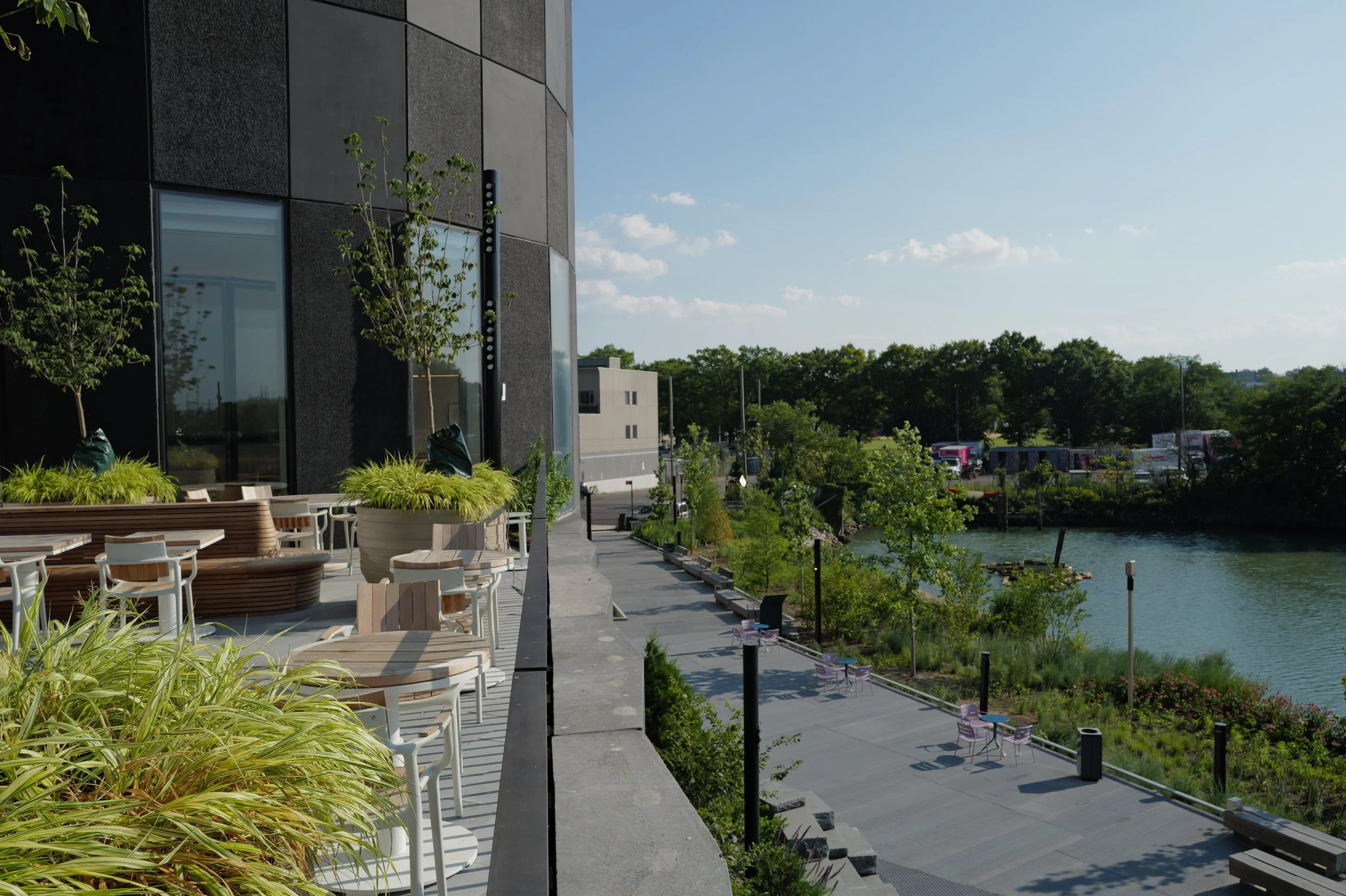
For this groundbreaking new film studio, our firm designed a new public waterfront recreation area open to the entire community. Creating this new amenity required close coordination with the NYC Department of City Planning and NYS Department of Environmental Conservation, among other agencies. We worked with representatives from these agencies as partners, with a common goal of creating the best possible place for both humans and the natural environment.
As a former industrial zone, the new park area had experienced significant environmental degradation over decades. Our restoration and planting strategy provided for an initial baseline restoration, with additional pollutants removed by phytoremediation over time.
Overall, our design preserved and enhanced the delicate natural features of the coastline, while providing resiliency for the new studio building, and of course creating a wonderful new public space for the community to gather and enjoy their natural resources.
In addition to the waterfront area, we also designed a complete streetscape along the other face of the building, which included bioswales and other sustainable features. This area was large enough to include amenities for the public as well, as a prelude to the larger waterfront area found at the end of the street.
Typology
Waterfront Public Access Area
Location
Queens, NY
Completion
Ongoing
Size
3 acres
Collaborators
Bjarke Ingels Group
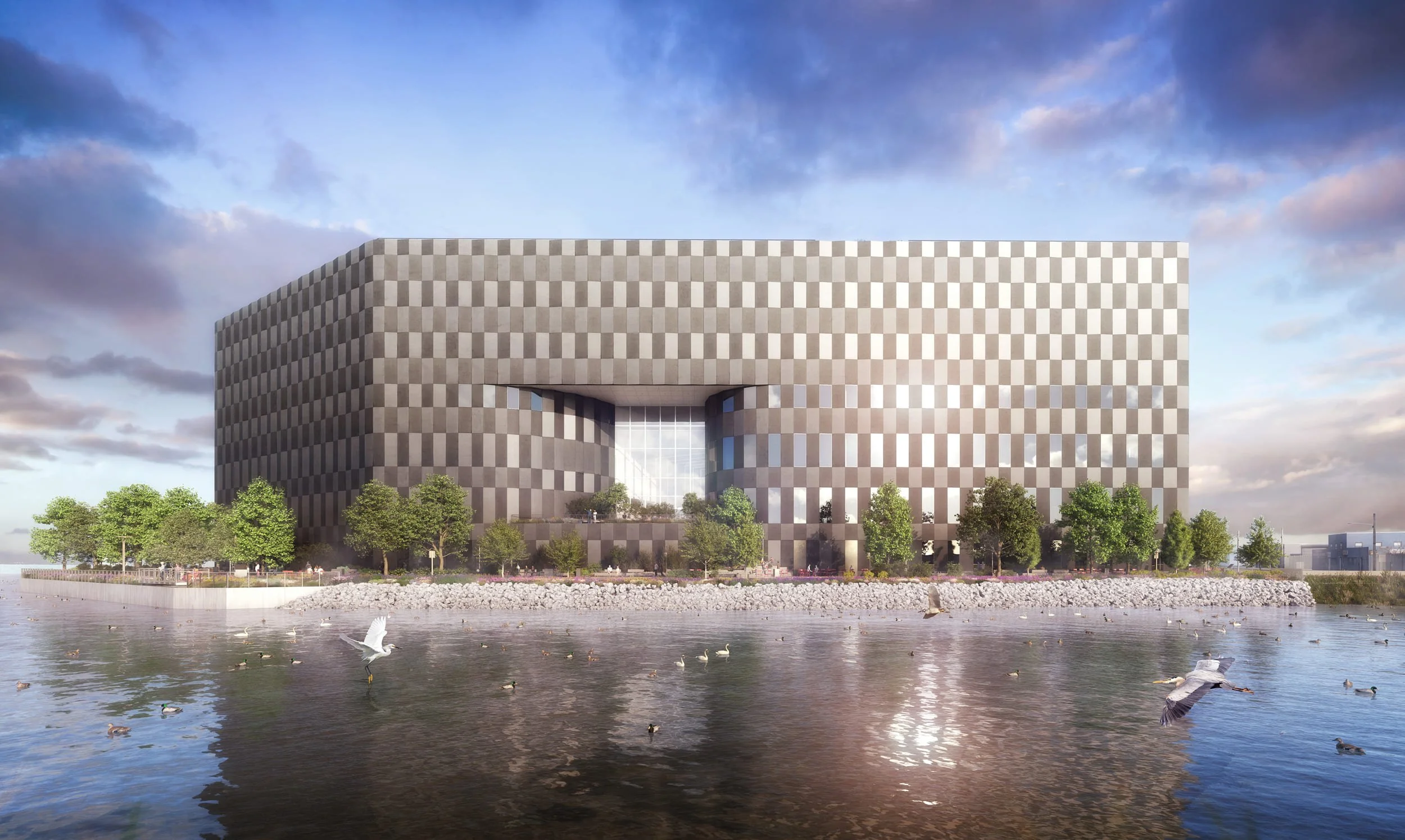


This transformation of New York’s urban waterfronts from its industrial legacy into publicly accessible open spaces warrants celebration. The Wildflower Studios landscape, formerly the site of the Steinway Piano factory, is primarily built on urban fill adjacent to the tidal wetlands bounding the historic path of Luyster (or Steinway) Creek.
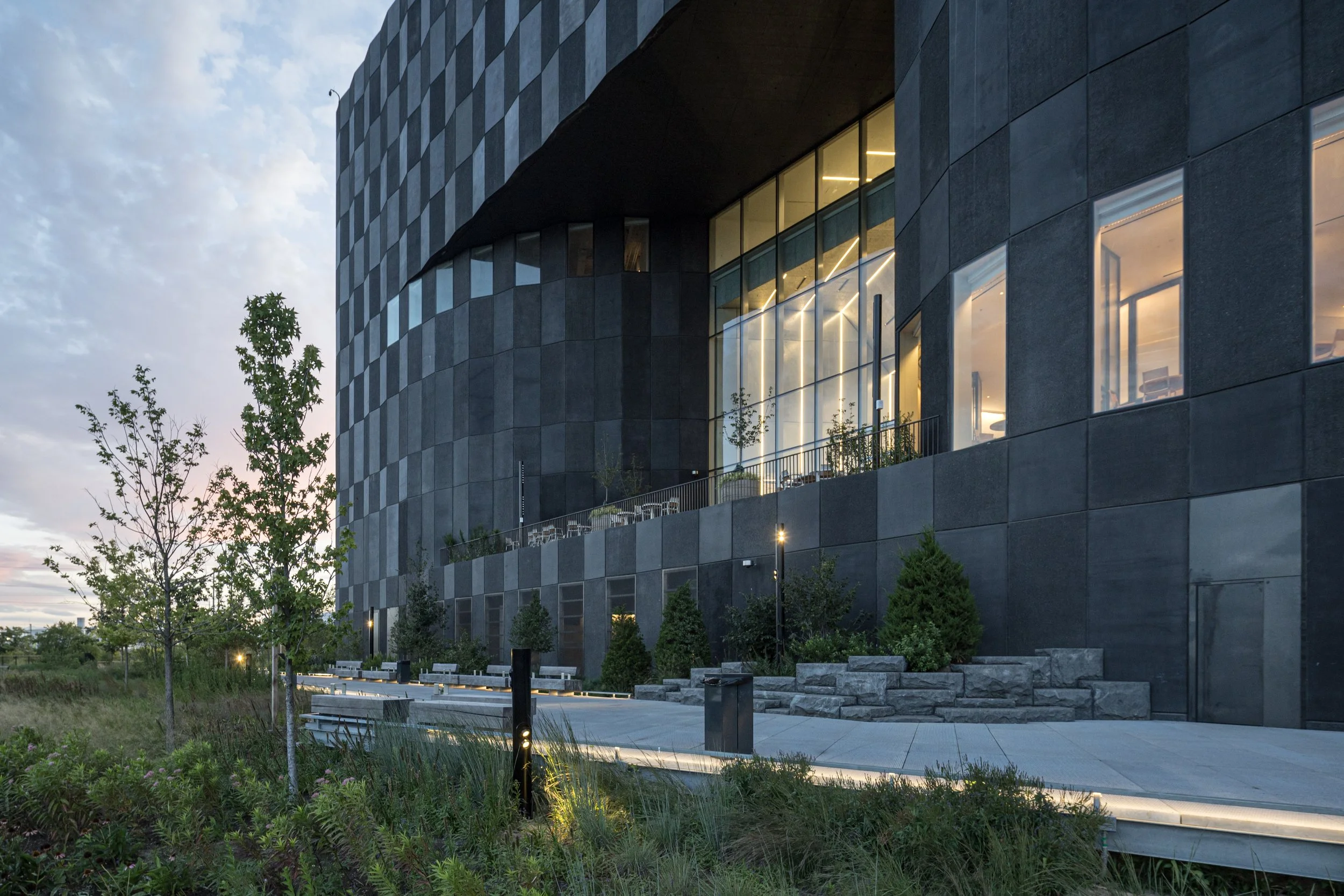
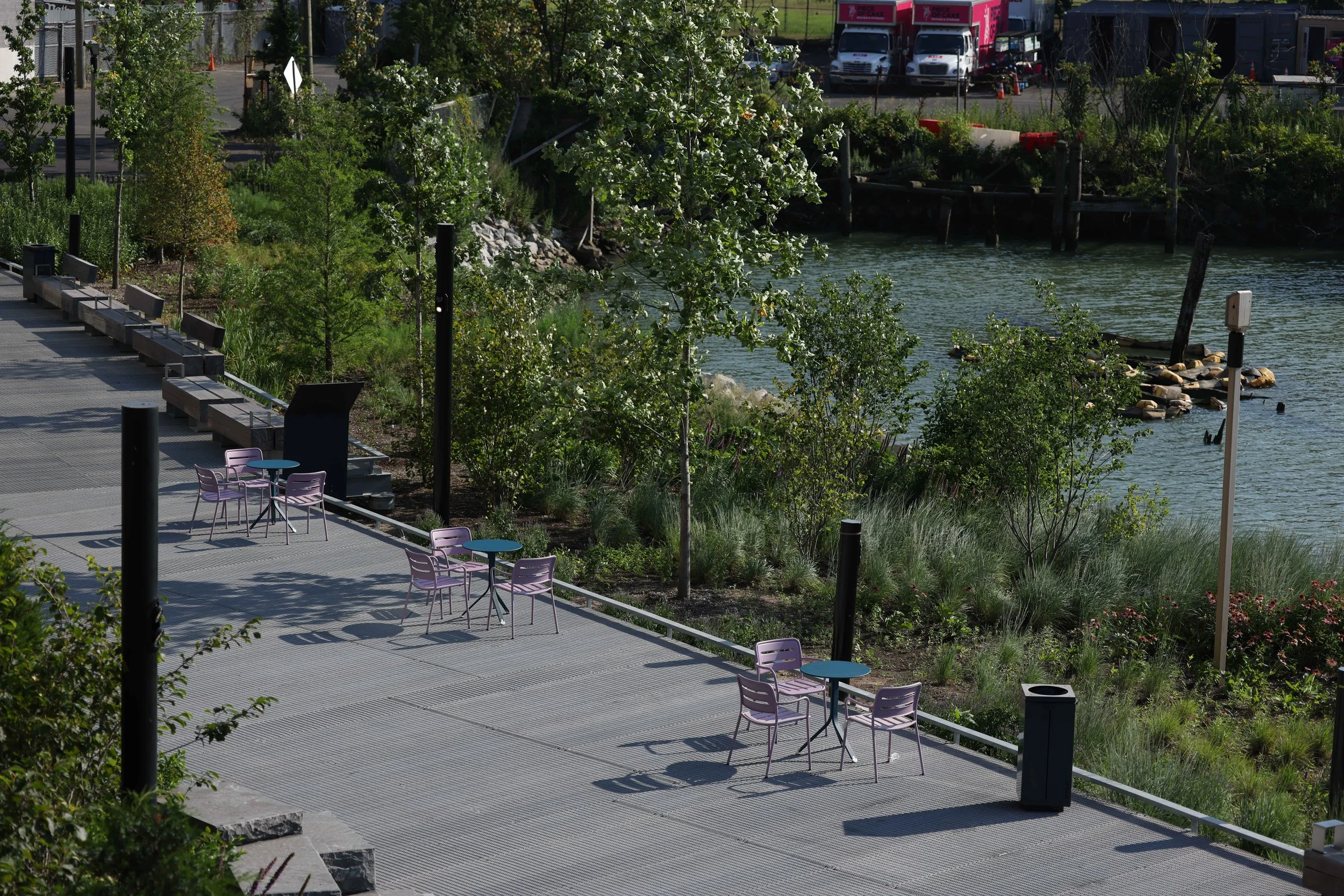
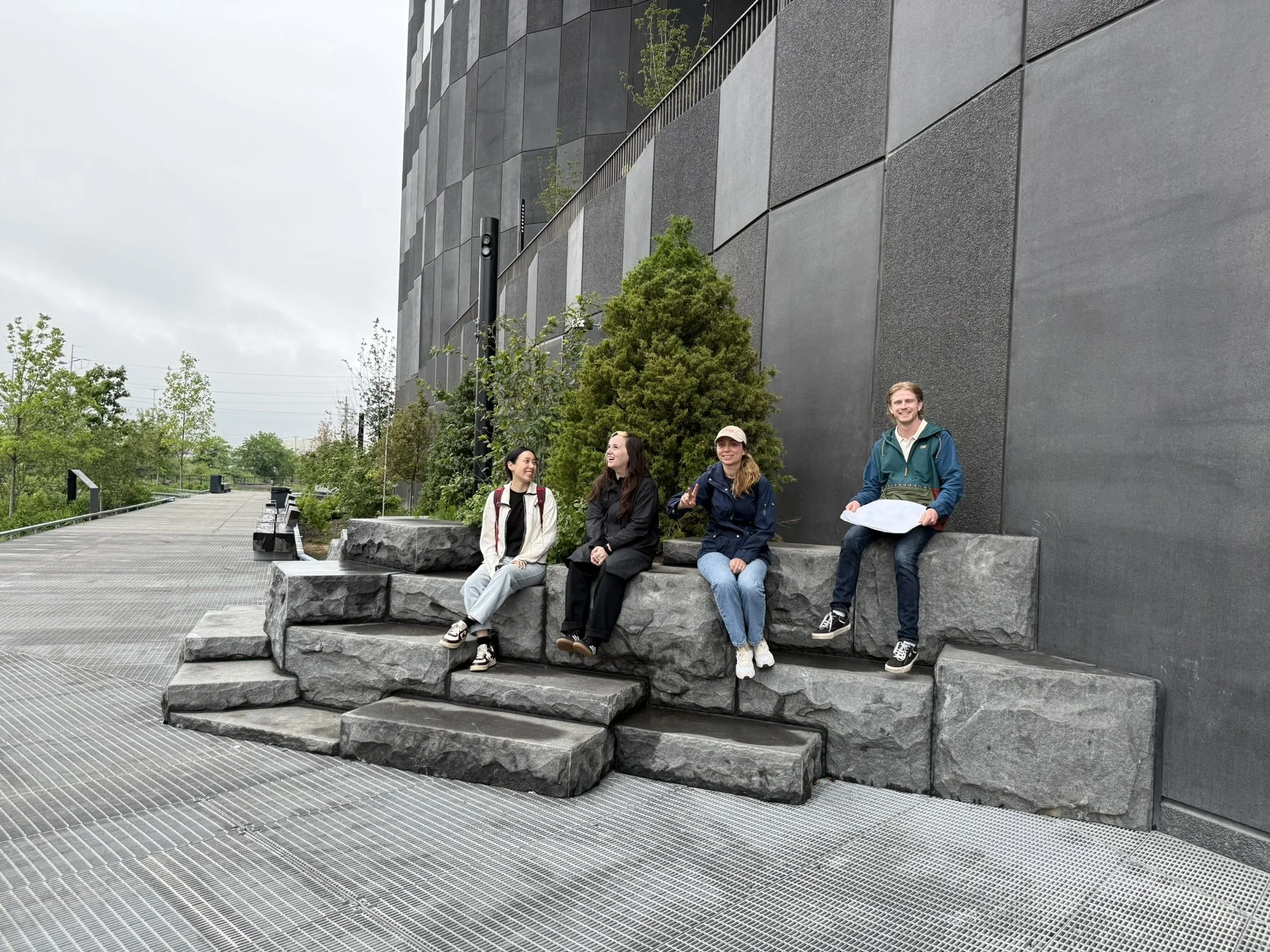
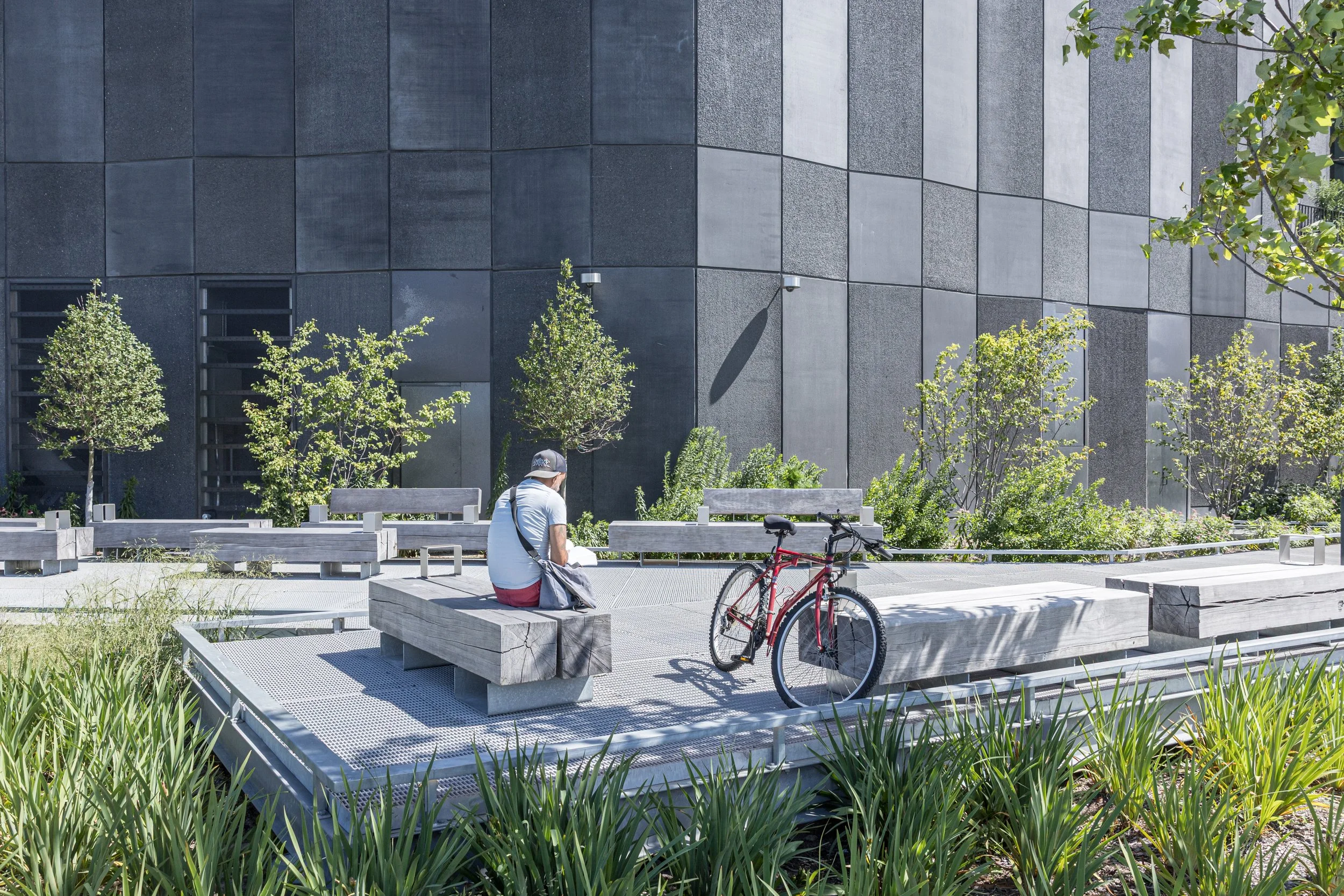
Vistors explore the site from raised catwalks on a pier system. Set on a raised application, this pathways are fully permeable for the surrounding landscape, capturing all stormwater runoff, and creating a flood-able resilient design. The helical pile footings create less ecological impact. The circulation strategies includes ADA accessible metal grating, wood decking and recycled permeable concrete pavers along the streetscape.

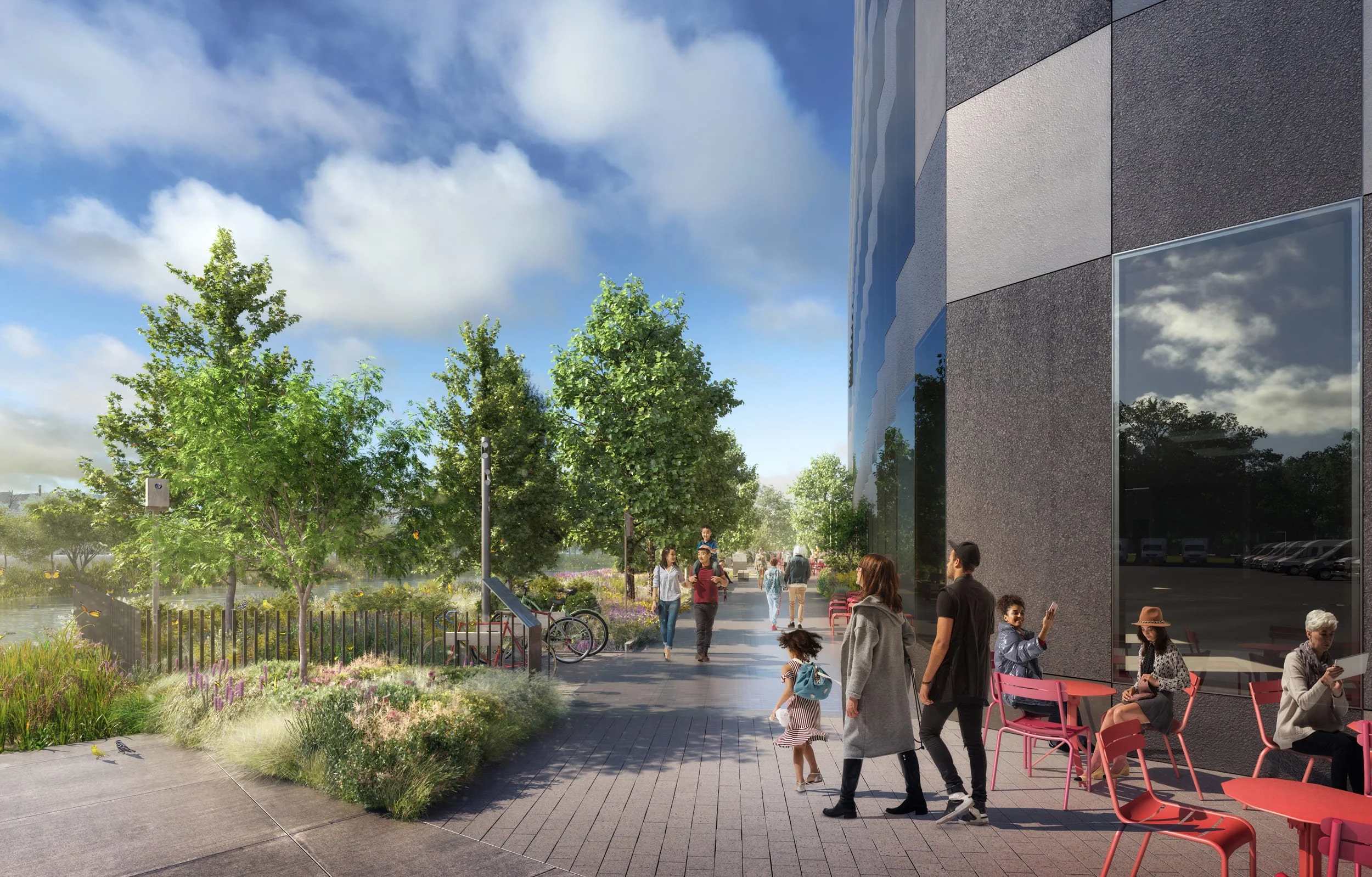
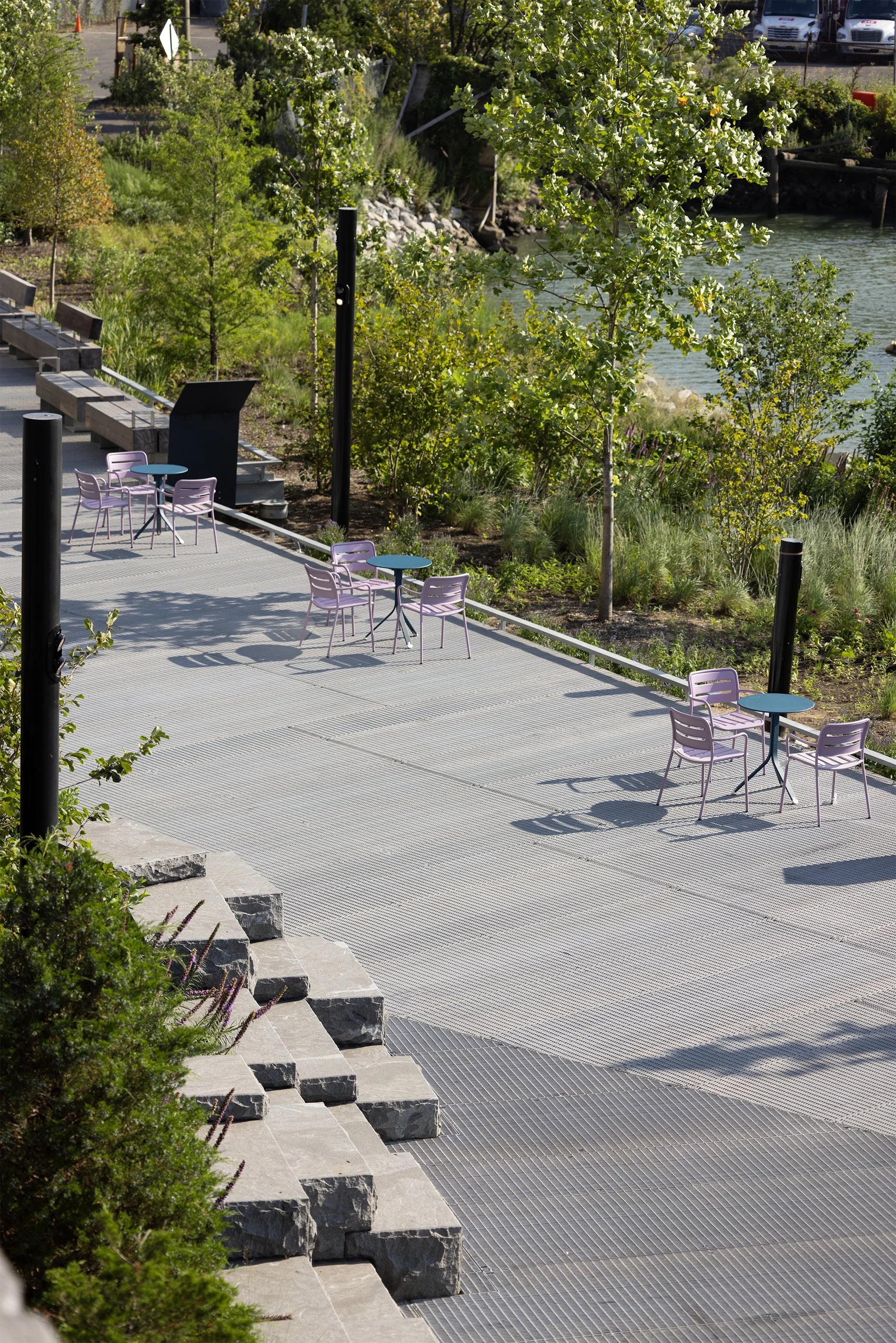
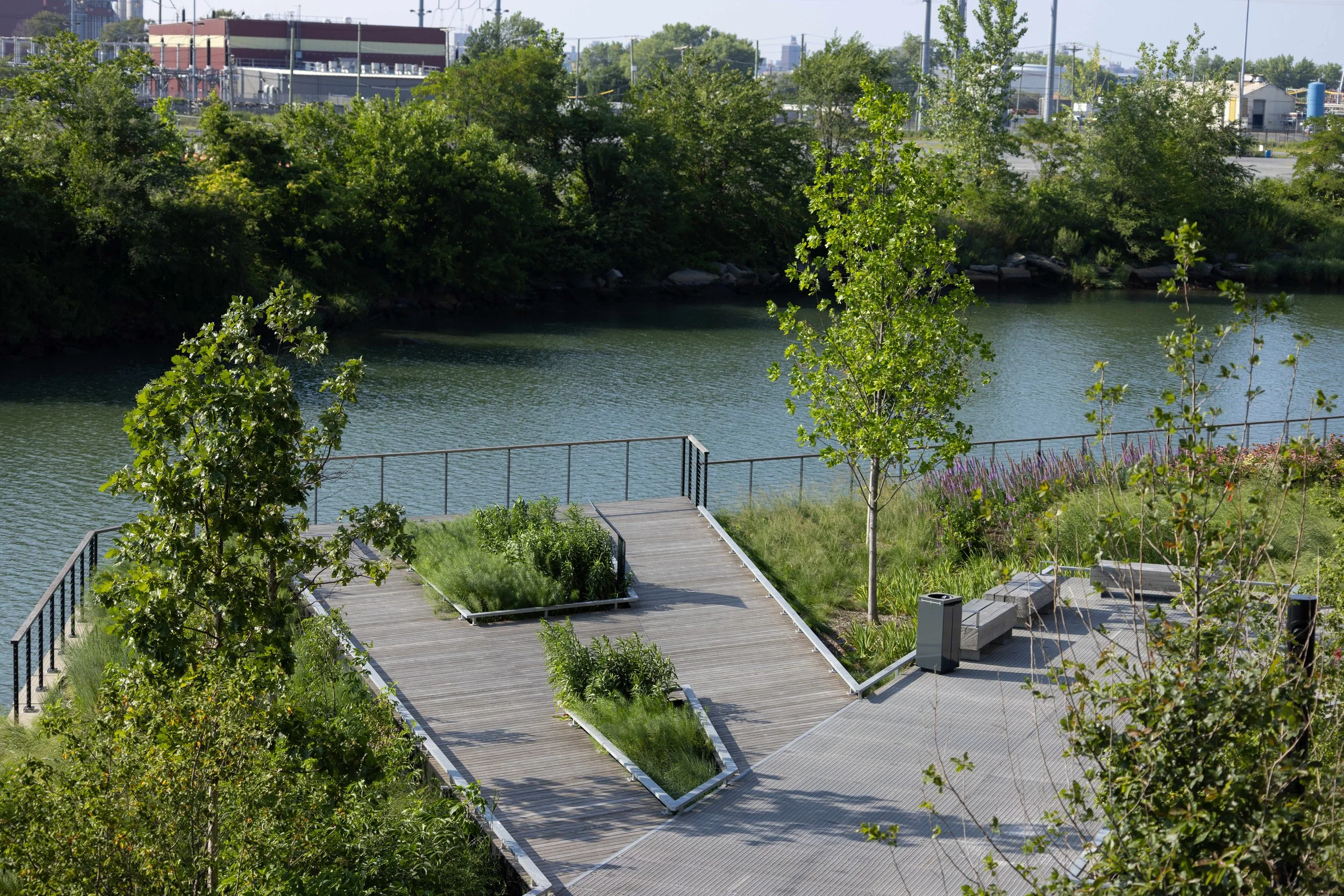
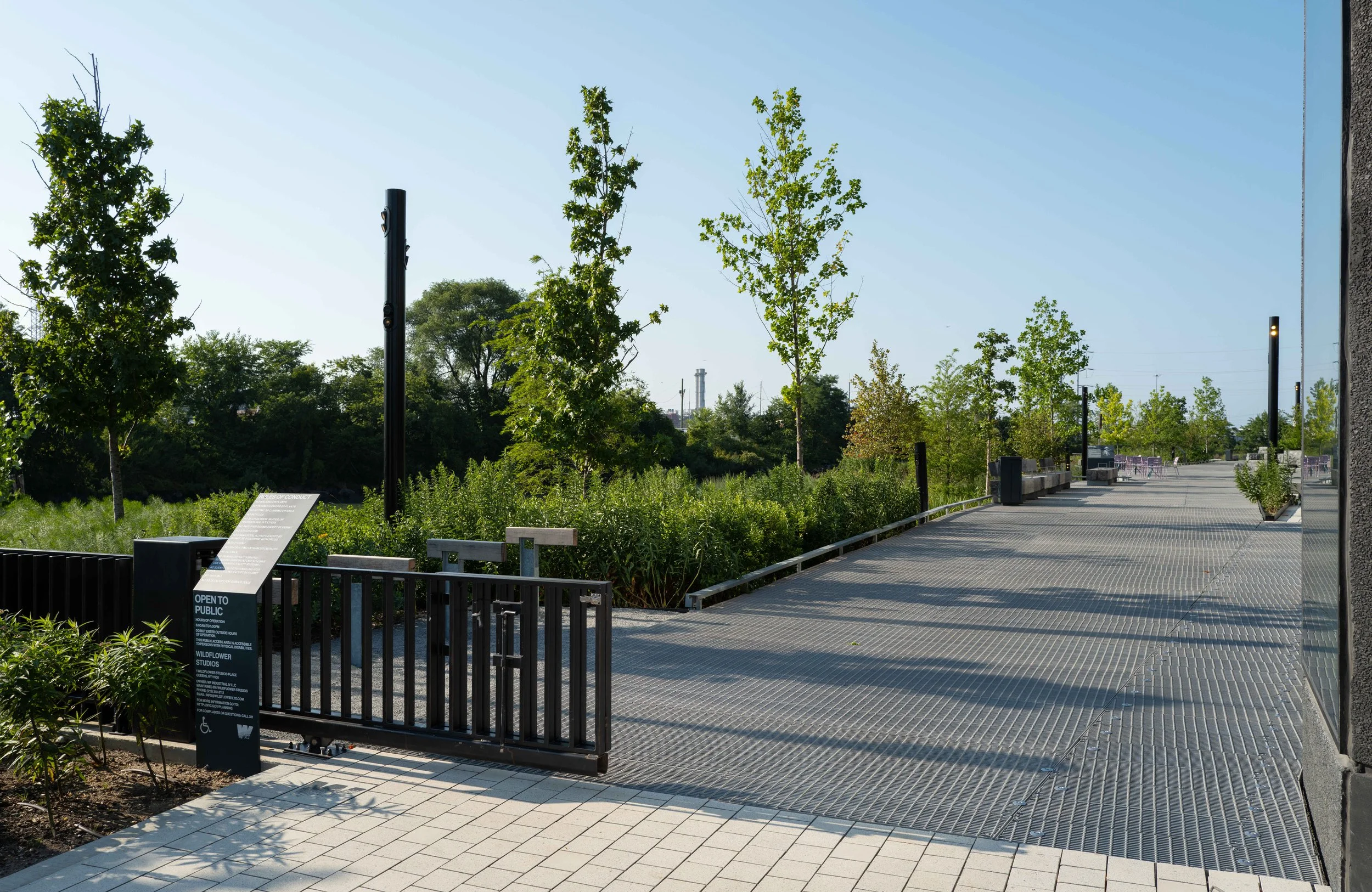
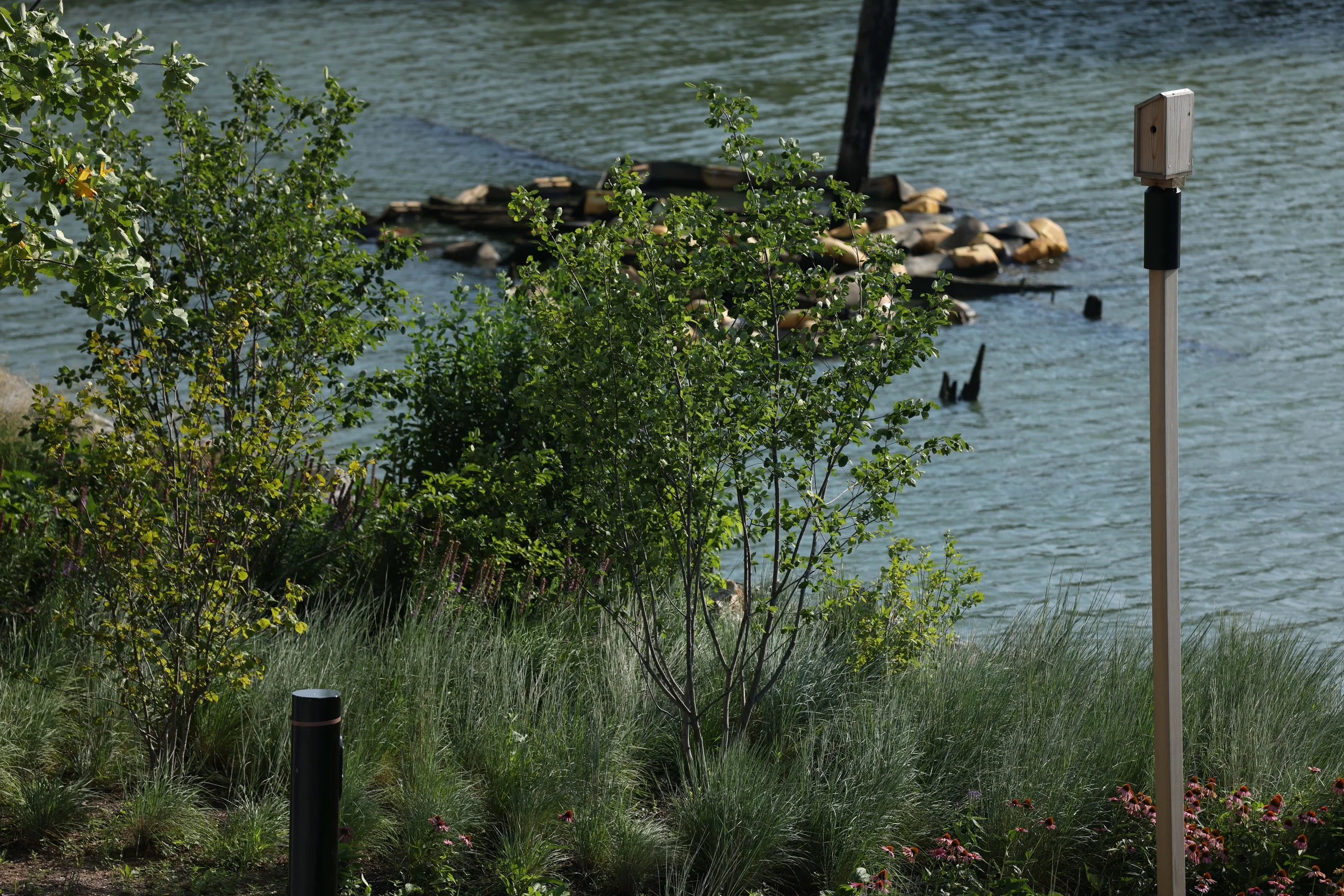
Our urban waterfront revitalization efforts focus on the ecologically rich ecotone where the water meets land. Where the upland shoreline vegetation transitions into intertidal zones with wetland and bioswales, our design supports healthy invertebrate, fish and water bird communities that utilize and often gravitate to shoreline environments. Our design creates diversity with upland plantings, bioswales and rock block revetements. The rock block patterning helps epifaunal/ benthic animals live and shelter on these surfaces. These surfaces are often characterized by organic natural materials that have cracks and crevices with a diversity of areas to explore. Our design adds complexity through the establishment of wet meadows and bioswales. The bioswales are comprised of native coastal vegetation, salt tolerant species and successional blooming plantings.

Vistors explore the site from raised catwalks on a pier system. Set on a raised application, this pathways are fully permeable for the surrounding landscape, capturing all stormwater runoff, and creating a flood-able resilient design. The helical pile footings create less ecological impact. The circulation strategies includes ADA accessible metal grating, wood decking and recycled permeable concrete pavers along the streetscape.
Per the Environmental Reports completed at the project outset, the site’s historic fill materials are considered to be the primary contributor to elevated levels of PAH (polycyclic aromatic hydrocarbons) in the soils and groundwater – a known carcinogen. We took a careful approach to Phytoremediation to target both the on-site contaminants present in the site’s soils as well as the recurring contaminants attributed to urban stormwater runoff. To accelerate the natural processes of metabolic degradation, we selected deep rooted grasses that will both aerate the soil and provide exudates that together support soil microbial life.
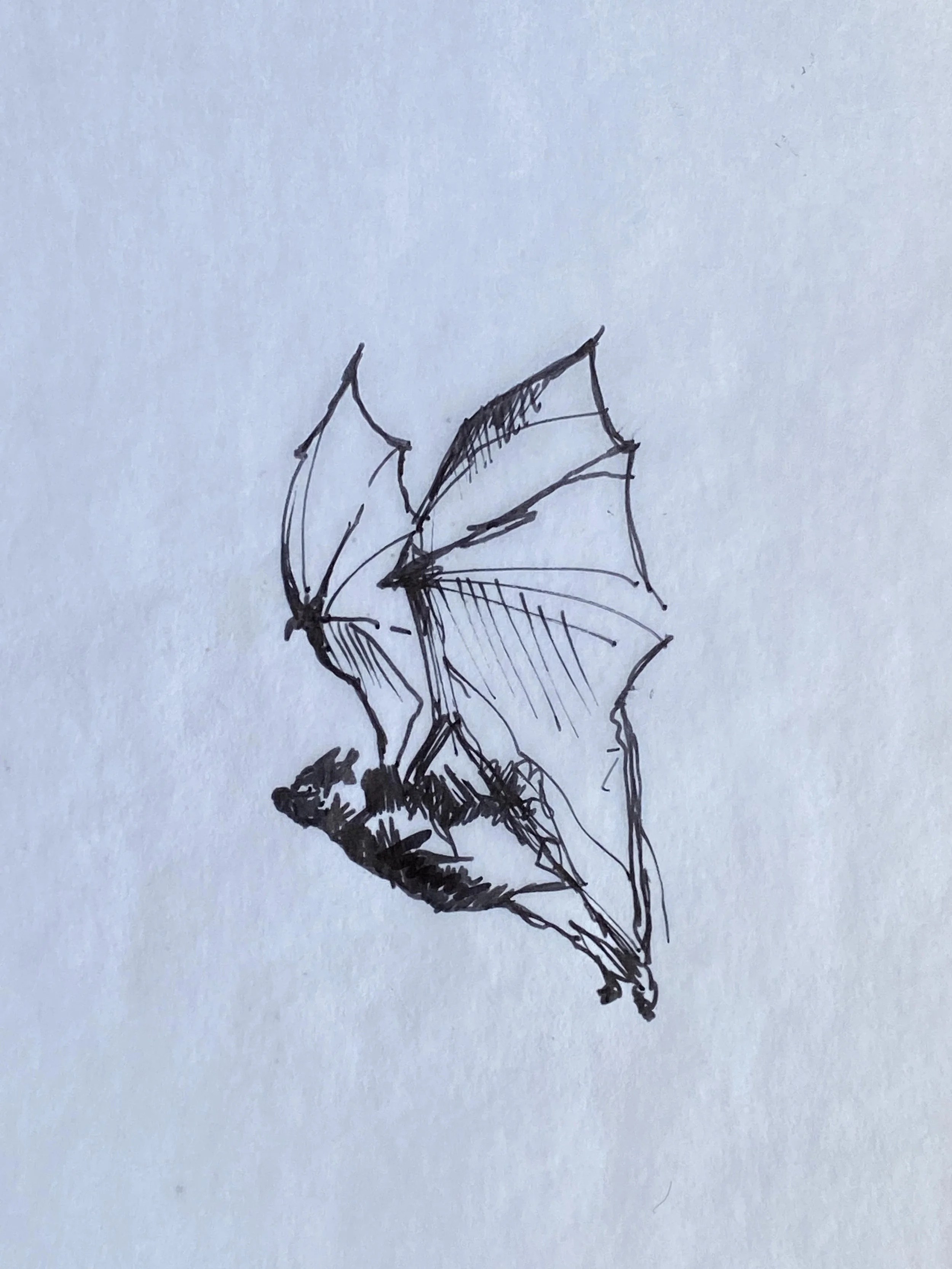
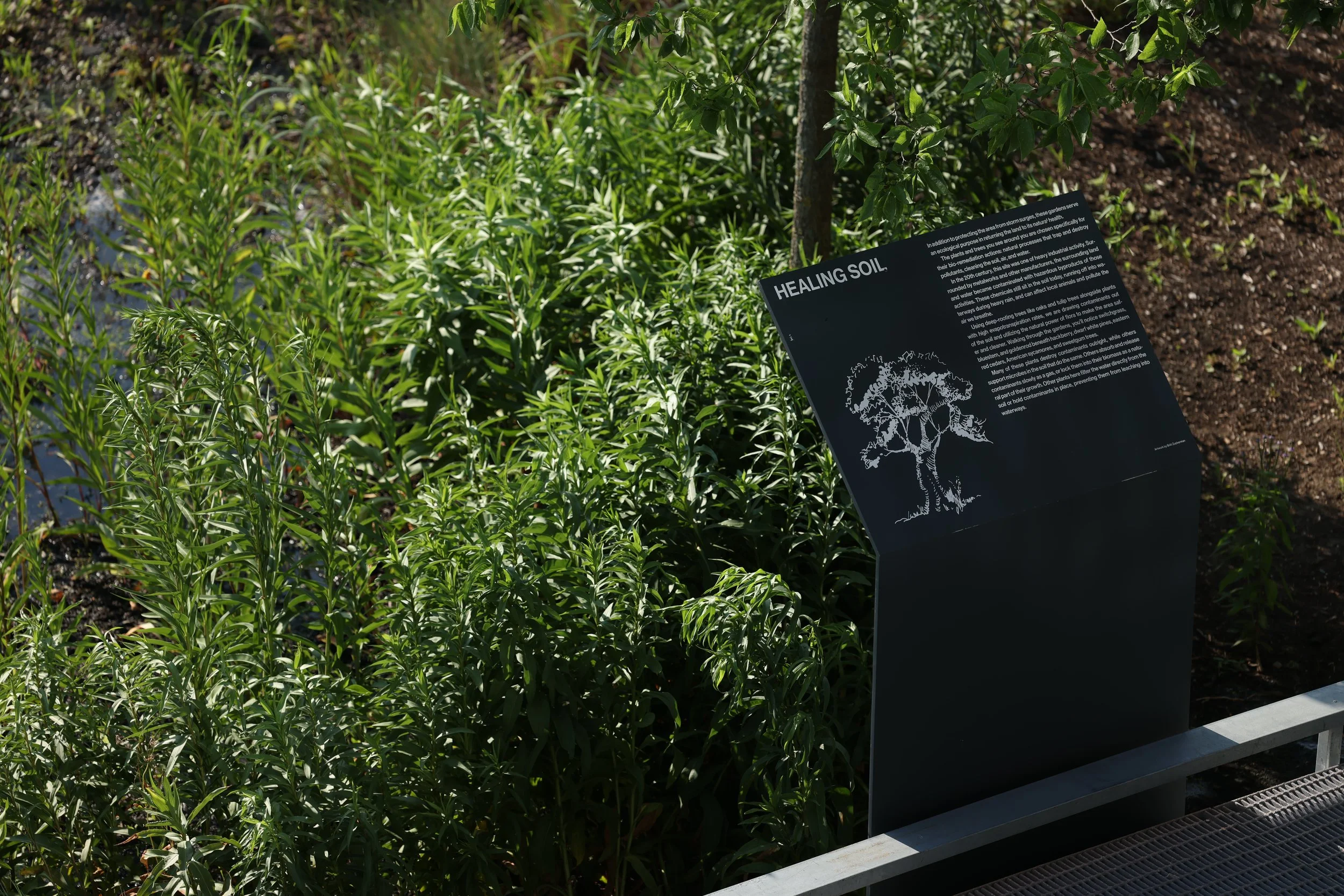
In collaboration with the wayfinding team, Dirtworks provided text and hand drawn graphics for the educational signage
The Wildflower landscape is designed to promote local shorebird population by enhancing habitat at known nesting sites. Our design includes the installation of custom bat, bird insect houses. We studied birds endemic to the region and cross referenced their habitat wishes for conflicting nesting species. Educational signage throughout the park, featuring hand sketches from the landscape architect, educates the public on local species such as the red bat (Lasiurus borealis), bioswale mechanics and New York’s changing shoreline.